

Walk-In Tub Buying Guide
THOUGHTFUL GUIDANCE FOR CHOOSING A TUB THAT SUPPORTS SAFER, MORE COMFORTABLE BATHING.
Welcome
Choosing a walk-in tub is about more than selecting a beautiful fixture. It is about understanding how someone will enter, bathe, move, and get out comfortably, and how the tub will work within the bathroom and everyday routine.
For some people, the goal is greater independence. For others, it is making bathing easier when balance, strength, flexibility, or mobility has changed. And when a caregiver provides assistance, the space needs to work comfortably for them as well.
A well-chosen walk-in tub should fit the person, the bathroom, and the way bathing actually happens, while still feeling like a natural part of the home.
This guide will help you understand the features and practical considerations that matter most before choosing a walk-in tub.
What is a walk-in tub?
A walk-in tub is designed to make entering and leaving the bathing area easier by replacing the high side of a traditional bathtub with a watertight door and lower entry point.
Most models include a built-in seat, allowing the person to bathe while seated rather than lowering themselves to the floor of a conventional tub. Depending on the design, features may also include grab bars, hand-held showering, hydrotherapy jets, heated surfaces, and easier-to-reach controls.
But the door is only one part of what makes a walk-in tub work well.
Entry height, seat height, door opening, available transfer space, control placement, and the person's individual mobility all affect how comfortable and practical the tub will be to use.
That last paragraph is important because it naturally sets us up for the next image block and then WHAT TO LOOK FOR IN A WALK-IN TUB.

EASIER ACCESS, GREATER COMFORT
A well-designed walk-in tub can make bathing easier to enter, use, and enjoy while preserving the comfort and privacy of the bathing routine.
Thoughtful details such as comfortable seating, well-placed support, easy-to-reach controls, and an entry designed around the person can make an important difference.
The best bathing solution is one that supports the person comfortably while allowing the bathroom to continue feeling like home.
what to look for in a walk-in-tub
Walk-in tubs can look similar at first glance, but the details that determine whether a tub will work comfortably for someone can vary considerably.
Rather than beginning with features, start with how the person will enter the tub, sit down, bathe, reach the controls, and get back out. Consider whether assistance is needed now or may be needed in the future.
As you compare tubs, pay particular attention to entry and transfer, seating and bathing position, door design, controls, filling and draining, comfort features, bathroom fit, installation requirements, and long-term service.
The best choice is not necessarily the tub with the most features. It is the one that fits the person, the space, and the way the tub will actually be used.
Entry, Transfer & door design
The defining feature of a walk-in tub is its door, but the important question is not simply whether the tub has a low entry. It is how the person will actually get through that opening and into the seat.
Look at the Entry Height
A lower threshold reduces the height someone needs to step over compared with a traditional bathtub.
But "low entry" can mean different things from one tub to another. Consider the person's ability to lift each foot, maintain balance, and step through the opening comfortably.
For someone who uses a walker, wheelchair, or requires assistance, threshold height is only one part of the transfer.
Consider the Door Opening
Look at both the width of the doorway and the amount of clear space around it.
Can the person approach the opening comfortably? Is there enough room for their feet and legs as they enter? If a mobility aid is used, where will it be positioned?
If a caregiver assists with bathing, make sure the door configuration leaves enough room for that assistance.
Understand Inward- vs. Outward-Opening Doors
Some walk-in tub doors open inward, while others open outward.
An inward-opening door can require less clear floor space outside the tub, but the person needs enough room inside to maneuver around the door while entering and closing it.
An outward-opening door may provide a more open entry and can be helpful for some transfer situations, but it requires adequate bathroom clearance for the door to swing outward.
Neither design is automatically better. The right choice depends on the person, the transfer method, and the bathroom layout.
Think Through the Transfer
For someone who walks independently, entering may simply involve stepping through the doorway, turning, and sitting.
For someone using a walker or wheelchair, the process can be quite different. Consider how close the mobility device can come to the tub, whether the person can turn or pivot comfortably, and whether assistance is required.
If transfers are difficult or require significant physical help, an occupational or physical therapist can help evaluate the person's transfer needs before a tub is selected.
Check the Door & Seal
The door should be straightforward to open, close, and secure. Handles and locking mechanisms should not require excessive grip strength or complicated movements.
Because the door forms part of the tub itself, also ask about the door seal, warranty coverage, and service availability if adjustment or replacement is ever needed.
Do not evaluate a walk-in tub by threshold height alone. The entire path from approaching the tub to sitting securely inside should work for the person who will actually use it.
Seated vs. Full-length bathing
Not all walk-in tubs are designed for the same bathing position.
Many traditional walk-in tubs are designed primarily for upright seated bathing, with a built-in chair-height seat and deeper water around the body. Other designs provide more room to extend the legs or recline, creating an experience closer to bathing in a conventional tub.
Neither approach is inherently better. The right choice depends on how the person prefers to bathe and how comfortably they can get into position.
Consider Upright Seated Bathing
A built-in seat can make it easier for someone to remain in a supported position while bathing rather than lowering themselves to the floor of a conventional tub.
When comparing seated tubs, consider:
- Seat height, width, and depth
- Back support and bathing position
- Leg and foot room
- Location of grab bars
- Ability to reach the controls and hand shower comfortably
The seat should fit the person well enough that they feel stable and comfortable throughout the bath.
Consider Legroom & Reclining Position
If relaxing with the legs extended is important, look carefully at the interior dimensions and bathing position.
Some walk-in tubs provide more room for the legs, while others are intentionally compact and designed around a more upright seated posture.
Do not rely only on the tub's exterior dimensions. The usable interior space and position of the seat determine how the tub will actually feel.
Think About Getting Back Up
Comfort while seated is only part of the experience.
Consider whether the person can move comfortably from the bathing position to standing when it is time to leave the tub. Seat height, available support, leg strength, balance, and the person's transfer ability all matter.
If standing from a seated position is already difficult, evaluate this part of the routine carefully before choosing a tub.
Choose Around the Person's Bathing Preference
Some people want a walk-in tub primarily because they miss being able to enjoy a warm bath. Others are looking first for easier access, supported seating, or a way to bathe with less assistance.
Those priorities may lead to different choices.
Before comparing jets, lighting, or other optional features, make sure the basic bathing position is one the person will actually find comfortable and enjoyable.
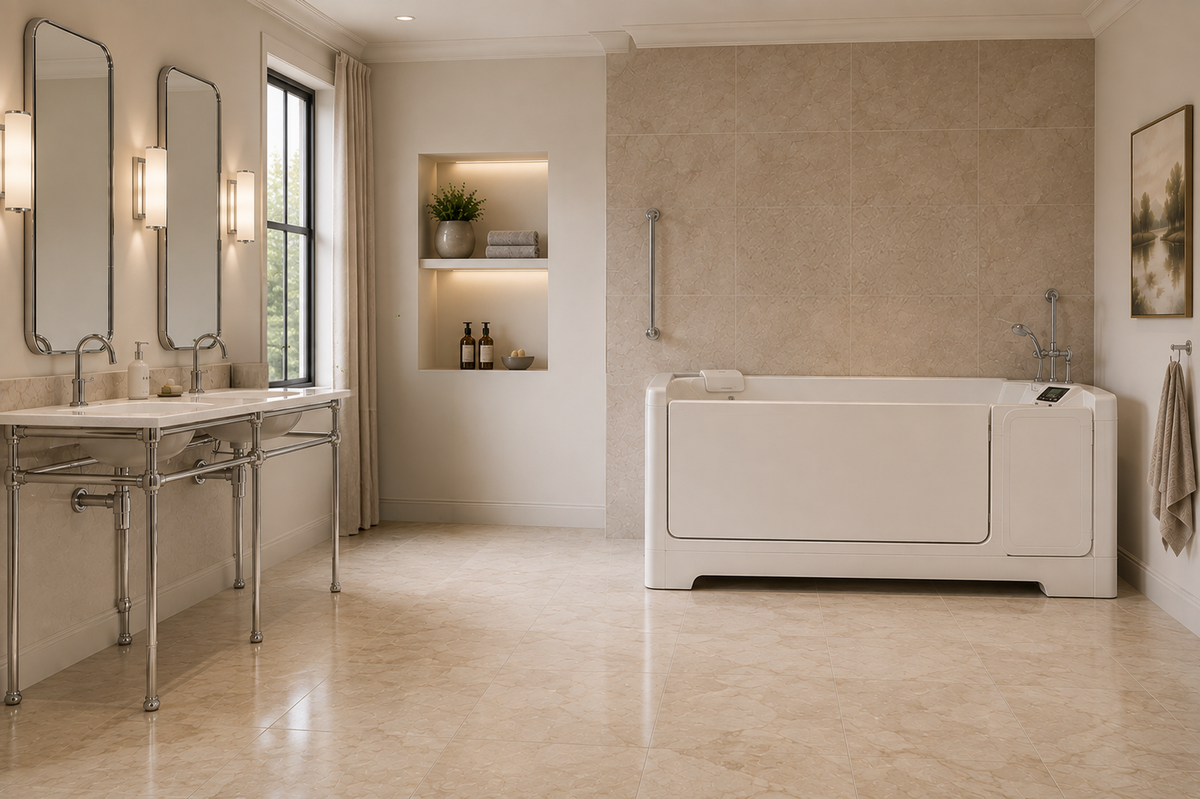
Bathing, Your Way
Accessibility shouldn't mean giving up the bathing experience you enjoy.
From supportive seated bathing to a more relaxed, full-length soak, consider not only how you enter the tub, but how you want to feel once you're there.
The right tub should support both comfort and independence while making bathing something to enjoy again.
Comfort & Therapeutic Features
Walk-in tubs are available with a wide range of features designed to make bathing more comfortable and enjoyable. The key is deciding which features will genuinely improve the experience for the person using the tub.
Hydrotherapy Jets
Water jets can provide a gently massaging bathing experience and may be especially appealing to someone who enjoys the feeling of moving water.
If considering a jetted tub, look at where the jets are positioned, how easily they can be controlled, and how the system is cleaned and maintained.
Air Jets
Some tubs use air jets to create a softer bubbling effect throughout the bath. The sensation is different from traditional water jets, so personal preference matters.
As with any jetted system, ask about cleaning, maintenance, and whether the feature can be used independently of other functions.
Heated Surfaces
Because a walk-in tub must generally be entered before it is filled and remain closed until much of the water has drained, comfort while waiting matters.
A heated seat or backrest can make that time more comfortable, particularly for someone who tends to feel cold easily.
Hand-Held Showering
A hand-held shower can make rinsing, washing hair, and bathing while seated much easier.
Look for a shower wand that is easy to reach from the seated position, simple to operate, and long enough to use comfortably without excessive reaching or twisting.
Other Comfort Features
Depending on the model, you may also find features such as lighting, heated backrests, adjustable water or air jets, and other enhancements.
These can be enjoyable, but they should come after the fundamentals: comfortable entry, secure seating, accessible controls, appropriate support, and a bathing position that works for the person.
Choose comfort features because they will genuinely be used and enjoyed, not simply because they appear on a longer feature list.
Controls, Filling & Draining
A walk-in tub should be easy to operate from the seated position. Controls that look simple from outside the tub may feel very different when someone is seated, wet, or has limited reach or dexterity.
Make Sure Controls Are Easy to Reach
Consider the location and operation of the faucet, temperature controls, hand shower, drain, jets, and any other frequently used features.
The person should not need to stretch, twist, lean forward excessively, or use significant hand strength to operate them.
Controls should also be clearly marked and intuitive, particularly when several bathing features are included.
Consider Filling Time
Unlike a conventional bathtub, a walk-in tub is generally entered and the door secured before the tub is filled.
That makes filling time more than a matter of convenience. The person will be sitting in the tub while the water rises.
Ask about the tub's filling system, but also remember that actual filling time can depend on the home's water pressure, plumbing, and available hot-water supply.
Consider Draining Time, Too
The door cannot normally be opened until the water has drained below the door opening, so the person may also spend time seated in the tub after bathing.
A faster draining system can shorten that wait. Again, actual performance may depend partly on the home's plumbing and installation.
Check the Hot-Water Supply
A deeper walk-in tub may require considerably more hot water than a conventional bath.
Before purchasing, confirm the tub's water capacity and whether the home's existing water heater can comfortably supply the amount of hot water needed for the intended bathing experience.
Think About Comfort While Waiting
Because filling and draining are part of every bath, consider how comfortable the person will be during those periods.
A comfortable seat, warm bathroom, hand-held shower, or heated seat or backrest, when available, may make the experience more pleasant.
Do not evaluate filling and draining by advertised speed alone. The tub, household plumbing, hot-water capacity, and person's comfort all work together to determine the actual bathing experience.
Size, Fit & Installation
A walk-in tub needs to fit more than the space where the existing bathtub sits. It also needs to work with the room, plumbing, electrical requirements, and the way the person will approach and use it.
Measure More Than the Tub
Start with the available space, but consider the entire bathroom.
Measure the tub area as well as doorways, hallways, turns, and other access points the tub may need to pass through during delivery and installation.
Inside the bathroom, make sure there is adequate clear floor space around the tub, particularly if the person uses a walker or wheelchair or receives caregiver assistance.
Consider the Bathroom Layout
Think about how the tub will relate to the toilet, vanity, doorway, and other fixtures.
A tub may technically fit within the available dimensions while still creating an awkward approach or reducing the space needed for transfers and assistance.
How the person gets to the tub is just as important as whether the tub fits against the wall.
Understand Plumbing & Electrical Requirements
Walk-in tubs may have different plumbing requirements from the fixture they replace. Larger tubs and faster-fill systems may require changes to water supply or drainage.
Models with powered features such as jets, heated surfaces, or other electrical components may also require appropriate electrical service.
These requirements should be reviewed before the tub is ordered.
Plan for Hot Water
As we mentioned above, tub capacity matters.
Ask how much water is required for the intended bathing depth and confirm that the home's water-heating system can support it comfortably.
Think About Installation Before Ordering
Walk-in tub installation can involve plumbing, electrical work, waterproofing, flooring, wall finishes, and sometimes modifications to the surrounding bathroom.
Before purchasing, understand what is included with the tub and what will need to be provided separately by the installer.
Also ask how future service access will be handled. Pumps, motors, plumbing connections, and other components should remain reasonably accessible if maintenance is ever required.
Use Qualified Professionals
Because installation requirements vary by tub and by home, have the space and product requirements reviewed by appropriately qualified professionals before installation.
Follow the manufacturer's specifications for plumbing, electrical service, structural support, waterproofing, and installation.
A beautiful walk-in tub is only a good choice if it fits the bathroom, works with the home's systems, and leaves enough space for the person to use it comfortably.
WARRANTY, SERVICE & LONG-TERM SUPPORT
A walk-in tub is a long-term addition to the home. Before purchasing, look beyond the features and finishes and understand what happens if the tub needs service several years from now.
Understand the Warranty
Ask what the warranty covers and for how long. Coverage may differ for the tub itself, door seal, plumbing components, pumps, motors, controls, and other powered features.
Also find out whether labor is included or whether the warranty covers replacement parts only.
Ask About Service & Replacement Parts
A strong warranty is most useful when there is someone available to provide service.
Ask who handles repairs in your area, how replacement parts are obtained, and whether components are expected to remain available over time.
For tubs with specialized features, knowing that qualified service is accessible can provide valuable peace of mind.
Keep Important Information
After installation, keep the model and serial number, warranty information, owner's manual, installer contact information, and service records together in an accessible place.
A walk-in tub should be chosen not only for how well it works on the first day, but for how confidently it can be maintained and supported in the years ahead.
MAKING THE RIGHT CHOICE
With so many sizes, configurations, and optional features available, choosing a walk-in tub can feel complicated.
It does not have to be.
Start with the things that determine whether the tub will work well every day, then consider the features that would make bathing more comfortable or enjoyable.
Start With the Person
Consider how the person currently bathes and moves.
Can they step through the entry comfortably? Sit and stand from the seat? Reach and operate the controls? Will they need assistance getting in or out?
A tub that fits the bathroom beautifully is not the right tub if it does not fit the person using it.
Prioritize the Essentials
Before comparing optional features, make sure the fundamentals are right:
- Entry and transfer
- Door configuration
- Comfortable seating
- Appropriate support
- Easy-to-reach controls
- Adequate hot water
- Reasonable filling and draining
- Proper fit within the bathroom
Once those needs are satisfied, consider which additional comfort features would genuinely improve the bathing experience.
Think About How the Tub Will Be Used
Ask what the person wants from bathing.
Is the priority easier access? Greater independence? Comfortable seated bathing? A deeper soak? More room to extend the legs? A relaxing jetted experience? Easier bathing with caregiver assistance?
The answer can help distinguish between features that matter and those that are simply nice to have.
Consider the Home, Too
Make sure the bathroom layout, plumbing, electrical service, water heater, delivery route, and installation requirements have been evaluated before making a final decision.
A walk-in tub is not simply a product being delivered. It becomes part of the home.
Ask Questions Before You Buy
If something is unclear, ask before ordering.
Confirm dimensions, door operation, seat measurements, water capacity, included features, installation requirements, warranty coverage, and service availability.
For a significant purchase, there is value in taking enough time to understand exactly what you are choosing.
The right walk-in tub is not the one with the longest list of features. It is the one that makes bathing work better for the person who will use it.
A THOUGHTFUL INVESTMENT IN YOUR HOME
A walk-in tub can be a significant addition to a bathroom, but its value is not measured simply by the number of features it includes.
The right tub can make bathing easier to access, more comfortable, and better suited to changing mobility, while allowing the bathroom to remain a beautiful and enjoyable part of the home.
Choose carefully. Consider the person first, understand the practical requirements of the space, and invest in the features that will genuinely improve the bathing experience.
A thoughtfully chosen walk-in tub should do more than fit the bathroom. It should help make one of life's most personal everyday routines feel comfortable, dignified, and enjoyable again.
ACCESSIBLE BATHING for your home
Discover our thoughtfully selected walk-in tubs and accessible baths, designed to support easier entry, greater comfort, and a bathing experience that feels at home in a beautifully considered space.